Monday, June 30, 2008

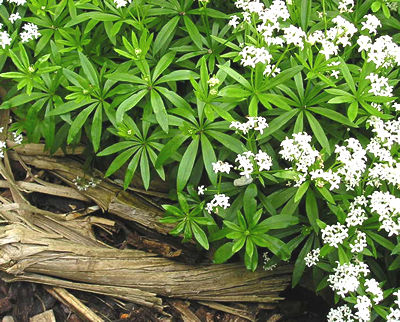
Woodruff


Woodruff was used as a diuretic and was a remedy for some disorders of the kidneys and liver. It was also used as a tonic and as a treatment for some heart disorders. Stomach pains were also treated by it.

Because of its fragrance it was used in the Middle Ages to freshen rooms. It was hung in bundles in houses.

Worms

One pleasant cure for intestinal worms involved eating strawberries. Garlic was a popular cure, and lemon was also thought to be instrumental in getting rid of worms. A tincture of thyme taken before eating in the morning or an infusion of nettles were also advocated as remedies.

Eating potato salad with walnut oil for several days in succession was an old suggested remedy for worms. Cucumber seeds was another remedy that was advocated.

Other plants that were used to expel worms included aloes, primrose and walnuts.

Enemas were frequently give to children to get rid of thread worms. One enema consisted of salt and water.

Wormwood


As the name suggests, wormwood was used to expel worms from the intestines. Early herbalists used wormwood as a diuretic and as an antidote to poison.

It was also used as an antiseptic and as a stimulant of the appetite.

Sunday, June 29, 2008

Wounds

Herbs that were used to heal wounds include adder's tongue, arnica, burdock, comfrey, dock, knotgrass, myrrh, parsley, plantain, sage and yarrow.

Honey, potatoes, pepper and apples mixed with olive oil were used in the dressing and healing of wounds. Tea was used to check bleeding of wounds, as were nettles. Cloves and cinnamon were also recommended to help in the healing process of wounds. Lavender was used to clean wounds, and borage tea was used to speed the healing process. Witch hazel was a popular cure.

Vinegar was an old remedy for wounds. In the nursery rhyme 'Jack and Jill', Jack has his head dressed with vinegar and brown paper when he 'breaks his crown'.

Poultices made from cabbage and from carrots were also used as folk remedies for wounds. The leaves of balm were also used in poultices. An ointment or lotion made from elderflowers was used to sooth inflammation and speed the healing process, as were meadowsweet and flax. Eucalyptus was used in a compress to stop bleeding and accelerate healing.

Later, iodine was used on wounds, especially in wounds that had stopped bleeding.

Woundwort


As the name suggests, woundwort was used in the healing of wounds. The bruised leaves were applied directly to the wounds to stop bleeding and accelerate the healing process.

Taken internally, it was used to treat internal bleeding and dysentery. It was used to relieve gout, painful joints and cramp. Dizziness was also treated by it.

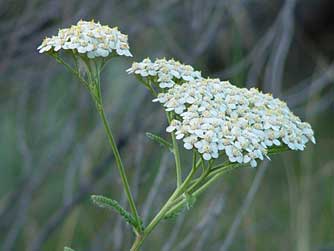
Yarrow

yarrow

Yarrow is sometimes known as soldier's woundwort, milfoil and devil's nettle. Its botanical name is Achillea millefolium, so called because the Greek hero Achilles is supposed to have used it to treat the wounds of his warriors after battle.

In folklore, yarrow leaves were hung over the cradles of babies to keep away witches, and young women slept with it under their pillows so that they would dream of their future lovers.

It was used as an antiseptic in the treatment of wounds and to reduce inflammation and stop bleeding. Severe colds and fevers were treated with it since it induced perspiration. It was used in eruptive diseases such as measles and chickenpox to bring out the spots.

Yarrow was a popular aid to digestion, and kidney and liver disorders were also treated with it. High blood pressure was treated with it, and it was used to relieve varicose veins. It was used as a remedy for bleeding piles. As a diuretic it was used as a remedy for cystitis.

The herb was used as a tonic. If the head was washed with it, it was thought to improve baldness, stop hair from falling out and condition the hair. As a wash it was used to treat inflamed eyes.

Saturday, June 28, 2008

Privacy Policy

I respect your privacy and I am committed to safeguarding your privacy while online at my site easy-home-remedies.blogspot.com . The following discloses the information gathering and dissemination practices for this Web site.

Log Files
Like most standard Web site servers, I use log files. This includes internet protocol (IP) addresses, browser type, internet service provider (ISP), referring/exit pages, platform type, date/time stamp, and number of clicks to analyze trends, administer the site, track user’s movement in the aggregate, and gather broad demographic information for aggregate use. IP addresses, etc. are not linked to personally identifiable information.

E-mail Subscription
If a user wishes to subscribe to my posts via e-mail (powered by Feedburner), I ask for contact information such as name and email address. Out of respect for my users’ privacy, a way to opt-out of these communications is provided.

Cookies
A cookie is a piece of data stored on the user’s computer tied to information about the user. My site use cookies for tracking visitors’ activity. Some of my business partners use cookies on our site (for example, advertisers). However, I have no access to or control over these cookies, once I have given permission for them to set cookies for advertising. You can choose not to accept cookies by modifying your browser settings. At any time, you may remove any cookie stored on your hard drive by deleting them in your browser’s settings section.

Links
This Web site contains links to other sites. Please be aware that I am not responsible for the privacy practices of such other sites. I encourage my users to be aware when they leave our site and to read the privacy statements of each and every Web site that collects personally identifiable information. This privacy statement applies solely to information collected by this Web site.

Advertisers and Affliates
I use outside ad companies to display ads on my site. These ads may contain cookies and are collected by the ad companies, and I do not have access to these information. I work with the ad companies: Google Adsense, Bidvertiser, Kontera and Project Wonderful. Please check their websites for respective privacy policies.

Google and the DoubleClick DART cookie
Google, as a third party vendor, uses cookies to serve ads on your site. Google's use of the DART cookie enables it to serve ads to your users based on their visit to your sites and other sites on the Internet. Users may opt out of the use of the DART cookie by visiting the Google ad and content network privacy policy.

Contact Information
If users have any questions or suggestions regarding my privacy policy, please contact me by sending an email to hainetmail {at} yahoo {dot} com.